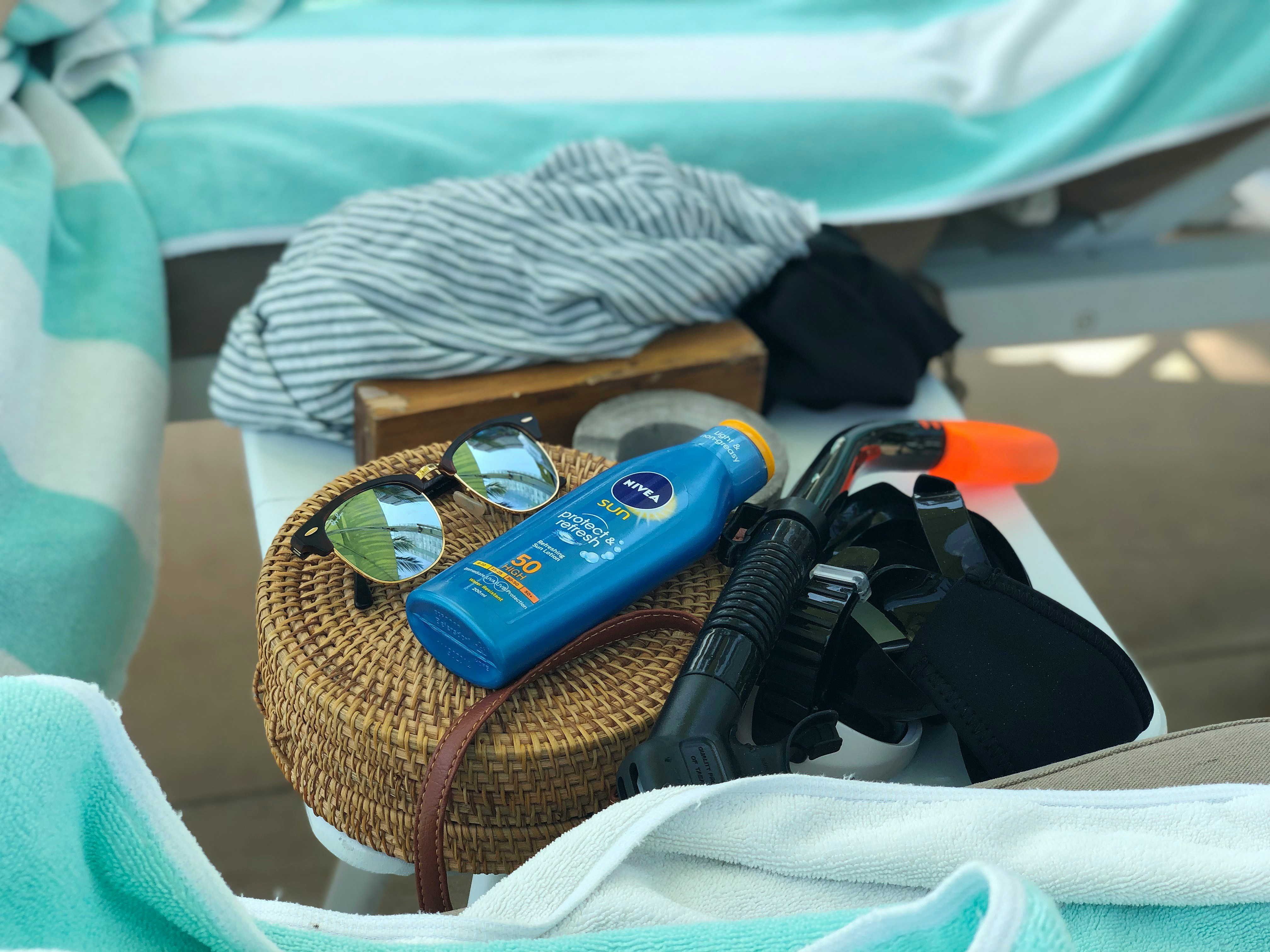
There are plenty of things you could declutter at the end of summer. You could go through your shorts, inspect your beach towels, throw away an empty bottle of sunscreen and call it a productive afternoon.
But there’s a much better reason to declutter right now.
You just finished using your summer stuff.
You don’t have to stand in your basement in February trying to remember whether your family actually uses that enormous beach tent. You know. You don’t have to guess which shorts you like, whether you need four coolers or if anyone still plays with the backyard games taking up half a shelf in the garage.
The evidence is fresh.
That’s what makes the end of a season one of the best times to declutter. Instead of asking the vague and occasionally terrifying question, “Could I ever need this?” you can ask a much more useful one:
“Did this earn another year of storage?”
Before you pack summer away, start with these 15 things.
1. The Summer Clothes You Spent All Summer Avoiding
Forget starting with everything you didn’t wear. That’s actually not always a useful decluttering rule.
You might own a nice summer dress you didn’t wear because you didn’t attend a wedding this year. That’s different from the pair of shorts you picked up six separate times, put on, looked in the mirror and immediately took back off.
Those are the clothes worth noticing.
Maybe they ride up. Maybe the waistband digs in. Maybe the fabric wrinkles if you look at it wrong. Maybe you technically like the shirt, but you spend the entire time you’re wearing it tugging the neckline back into place.
Whatever the reason, you had an entire summer to choose these clothes and repeatedly chose something else.
That’s useful information.
Before switching your closet over for fall, pull out the summer clothes you actively avoided and decide whether they’re really worth storing until next year.
2. The “Backup” Version of Something You Always Choose Another Version Of
Most clutter isn’t completely useless. That’s what makes it difficult to get rid of.
The second cooler works.
The old beach bag works.
Those folding chairs technically work.
The problem is that every time you need a cooler, beach bag or folding chair, you choose the other one.
Look for these second-string summer belongings.
If you own four insulated bags but always grab the same two, you probably know which ones deserve the space. If one beach bag is comfortable and easy to clean while another constantly falls off your shoulder, you don’t need to pretend they’re equally useful just because both can carry towels.
When two things do the same job, pay attention to which one you actually choose.
3. Anything You Were Annoyed to Find Again
This is an underrated decluttering category.
You opened the garage cabinet looking for the bug spray and there it was: that thing.
The leaky watering can.
The warped badminton racket.
The beach umbrella with the broken tilt mechanism.
The outdoor tablecloth that doesn’t fit your table particularly well.
The pool float that takes approximately three business days to inflate.
If you repeatedly felt annoyed that something was taking up space this summer, don’t dismiss that reaction.
Your home doesn’t need to be optimized down to the last square inch, but you also don’t need to provide permanent storage for possessions you actively dislike dealing with.
4. The Outdoor Stuff That’s Too Much Work to Actually Use
Some things sound much better in theory than they work in real life.
A giant inflatable might be fun once it’s inflated, but if getting it into the pool requires an air pump, three people and an engineering degree, you may eventually stop bothering.
The same thing can happen with elaborate lawn games, complicated camping equipment, giant picnic setups, bulky beach shelters and outdoor furniture that has to be dragged out and assembled every time you want it.
Ask yourself whether the effort required to use something is preventing you from using it.
If it is, that’s part of the item’s usefulness too.
Something doesn’t have to be broken to be a bad fit for your life.
5. Things You Kept Meaning to Repair All Summer
At the beginning of summer, you were definitely going to patch that float.
And fix the chair.
And replace the strap on that bag.
And figure out what’s wrong with the umbrella.
Now it’s August, and there they are.
Give yourself a deadline: either make the repair before you put your summer things away or admit that you probably don’t care enough about the item to fix it.
This is particularly helpful for inexpensive items where the hypothetical repair has kept something hanging around far longer than the object itself deserves.
Don’t store a broken item all winter along with an obligation to fix it next year.

6. The Summer Stuff Your Kids Quietly Outgrew
Kids don’t always announce that they’re finished with something. Sometimes they just stop reaching for it.
Look around at the things that didn’t get much attention this summer: sand toys, sprinklers, ride-ons, sidewalk toys, sports equipment, water tables, backyard games and pool toys.
Then think about why.
If your kids simply had a busy summer, that’s one thing. But if they’ve moved on developmentally, storing those things for another year isn’t going to make them younger next June.
This is actually a particularly good time to pass usable outdoor toys along. You know which ones were ignored, and they’re still fresh in your mind instead of buried behind the holiday decorations.
7. The “Someday We’ll Become People Who…” Equipment
Every household has a few aspirational possessions.
Someday we’ll camp more.
Someday we’ll have picnics.
Someday we’ll play croquet.
Someday we’ll take that elaborate beach setup instead of throwing two towels into a tote bag and leaving.
There’s nothing wrong with owning things for hobbies you don’t do constantly. The question is whether you’re storing equipment for something you genuinely intend to do or for an imaginary version of your household.
One unused summer isn’t necessarily enough evidence.
Three might be.
If something hasn’t been used in years, ask yourself whether you actually want the activity — or whether you just like the idea of being someone who does it.
8. The Things You Have Way Too Many Of
Summer seems especially good at creating accidental collections.
Reusable water bottles. Sunglasses. Baseball caps. Beach towels. Tote bags. Coolers. Insulated cups. Flip-flops. Gardening gloves.
Individually, every one of them can be useful.
Collectively, they can become ridiculous.
Instead of asking whether each individual item is useful, look at the category as a whole.
You may genuinely use beach towels constantly. That doesn’t necessarily mean your household needs 17 of them.
Figure out approximately how many you actually use between laundry cycles, add a reasonable buffer and keep your favorites.
This is often much easier than trying to decide whether Beach Towel #14 technically still works.
9. The Freebies That Sneaked Into Your House
Festivals, fairs, vacations, races, camps and summer events can generate an astonishing amount of promotional stuff.
Cheap sunglasses. Plastic cups. Drawstring bags. Water bottles. Frisbees. Foam can coolers. T-shirts three sizes too large.
They’re easy to bring home because they were free.
They’re weirdly difficult to get rid of because they’re technically useful.
But free stuff still costs you something once it’s in your house: you have to store it.
Keep the promotional things you genuinely like and use. Don’t feel obligated to maintain a collection of branded plastic cups simply because somebody handed them to you in July.
10. The Summer Purchases That Didn’t Solve the Problem
Maybe you bought a special container to keep sand out of the car.
It didn’t.
Maybe you bought a gadget that was supposed to keep mosquitoes away.
They remained extremely interested in you.
Maybe you bought an elaborate organizer for the beach, only to discover that throwing everything into one enormous tote bag is infinitely easier.
This is your chance to evaluate seasonal purchases while you still remember how they performed.
If something didn’t solve the problem you bought it to solve, you don’t have to keep storing it simply because you spent money on it.
The purchase already happened. Keeping the object won’t refund you.
11. Containers Full of Mystery Summer Supplies
Open the bins.
Seriously.
Don’t move a vaguely labeled “SUMMER” tote from one side of the basement to the other without looking inside.
These containers tend to accumulate things because they’re convenient places to toss anything vaguely seasonal. Eventually, a bin that supposedly contains beach supplies also contains three citronella candles, a broken pair of goggles, gardening twine, an old picnic blanket and something nobody can identify.
Take everything out.
Trash what’s actually trash, relocate anything that belongs somewhere else and group the remaining items by purpose.
Then you’ll know what you’re storing instead of simply storing the container.
12. Expired, Empty and Almost-Empty Summer Products
Now we can talk about the sunscreen.
But don’t stop there.
Gather the consumable products that accumulated in beach bags, bathrooms, cars, backpacks and outdoor storage areas: sunscreen, bug repellent, aloe, travel toiletries and other seasonal products.
Check expiration dates and condition. Get rid of anything that’s expired, leaking, contaminated or otherwise no longer usable according to its label.
Then look at all those bottles with approximately three uses left.
If they’re still good, use them.
Move products you can continue using into your everyday supplies rather than storing a collection of nearly empty bottles until next summer.
And make a mental note of what you actually went through. If you discovered six half-used sunscreens in six different bags, next summer’s problem might not be that you need more sunscreen.
It might be that you need one place to keep it.
13. Anything That Didn’t Survive the Season Very Well
Now give the hardworking summer stuff an inspection.
Beach towels, swimsuits, sandals, outdoor cushions, umbrellas, gardening gloves, pool toys, outdoor furniture and other frequently used items can deteriorate quickly.
The important thing is to do this before storage.
It’s surprisingly easy to put something away because you’ll “deal with it next year,” only to pull out the exact same ripped cushion or stretched-out swimsuit nine months later.
If something needs to be washed, wash it. If it needs a small repair and is worth repairing, do it. If it’s truly finished, dispose of it appropriately now.
Your future self does not need to unwrap garbage in June.

14. Things That Don’t Fit the Way You Actually Spend Summer Anymore
Lives change faster than our storage areas do.
Maybe you used to spend every weekend camping and now you mostly take day trips.
Maybe your kids are older.
Maybe you moved somewhere without a pool.
Maybe you used to entertain constantly and don’t anymore.
Maybe the enormous family beach setup made sense when your kids were toddlers but now everyone just wants a chair, towel and snack.
Sometimes clutter isn’t made up of bad things. It’s made up of things that belonged to an earlier version of your life.
Summer gear is especially susceptible to this because we use it for only a few months and then put it away. It can take years to notice that we’re storing equipment for routines we no longer have.
Look at your summer things as they relate to your life now.
15. Anything You’re Already Dreading Storing
Finally, pay attention to the stuff you’re standing there trying to figure out where on earth you’re going to put.
Bulky seasonal items come with a particularly high storage cost. A giant pool float, spare patio chair or enormous cooler isn’t taking up the same amount of room as a pair of goggles.
That doesn’t mean bulky things have to go.
It means they should earn their space.
If something is difficult to store and rarely used, that’s a combination worth questioning.
Before reorganizing the entire garage to accommodate it, ask whether you actually want to own it.
Sometimes the easiest storage solution is realizing you don’t.
A Better Question Than “Could I Use This Someday?”
The problem with asking whether you could use something is that the answer is almost always yes.
Sure, you could need three coolers simultaneously someday.
You could suddenly develop a passion for backyard badminton.
You could repair that folding chair.
That’s why seasonal decluttering works better when you use evidence instead of possibilities.
Ask:
Did we use it?
If not, why not?
When we needed something like this, did we choose this one?
If not, what did we choose instead?
Did it make summer easier or more enjoyable?
Or was it annoying every time it came out?
Does it fit our life now?
Not the life you had five years ago or the imaginary one you might have someday.
Would I buy this again today?
You don’t have to automatically get rid of something because one answer isn’t favorable. But several unfavorable answers tell you something.
What to Do With Everything You’re Getting Rid Of
Decluttering doesn’t have to mean filling a garbage bag.
In fact, many of the things you decide not to store may still have plenty of life left in them.
Clean, usable clothes, outdoor equipment, toys, coolers and household goods may be good candidates for donation, resale or a neighborhood Buy Nothing group. Friends and family may want children’s outdoor toys or recreational equipment you’ve outgrown.
Worn towels can sometimes be useful to animal shelters or rescue organizations, although you should check what your local organization currently accepts before dropping anything off.
Some damaged products may also be recyclable through local or specialty programs depending on their material.
The trash should be the last stop for things that genuinely can’t be safely reused, repaired, donated or recycled.
One caution: don’t let finding the perfect destination become another form of clutter.
If a donation box sits in your entryway for four months because you’re waiting to find exactly the right organization for every item, you haven’t actually finished decluttering.
Pick a reasonable destination and give yourself a deadline to get it out of the house.
Before You Put the Rest Away
Once you’ve decided what’s staying, there’s one last temptation to avoid:
Don’t immediately go buy a bunch of storage containers.
Clean what you’re keeping first. Make sure everything is completely dry. Group similar items together. Then look at how much stuff you actually have.
You may need far less storage than you expected.
And when you do put things away, try to store them according to how you’ll look for them next summer. Beach things together. Camping gear together. Outdoor games together.
A storage system doesn’t need to be beautiful. It needs to make retrieval obvious.
If next June you think, Where’s the beach stuff? and immediately know the answer, the system works.
Try a “Use It or Lose It” Bin Next Summer
If there are a handful of things you genuinely can’t decide about, you don’t have to force it.
Put those questionable items together in one clearly labeled bin.
Next summer, don’t make yourself use them just to justify keeping them. Simply see what happens.
At the end of the season, open the bin again.
Anything still sitting inside has now gone through an entire summer without being needed.
That’s much more useful information than trying to predict the future while standing in your garage.
The Best Time to Declutter Seasonal Stuff Is When the Season Ends
There’s a reason to do this now instead of waiting until next spring.
In March, you’ll be guessing.
Right now, you know.
You know which beach bag you always grabbed. You know which swimsuit you avoided. You know whether the kids touched the outdoor toys. You know which gardening tools irritated you, which summer purchases were surprisingly useful and which elaborate gadgets turned out to be completely unnecessary.
Use that information before you forget it.
Because the goal isn’t to fit as much summer stuff as possible into neatly labeled bins.
It’s to make sure the things taking up space in those bins are actually worth pulling back out next year.