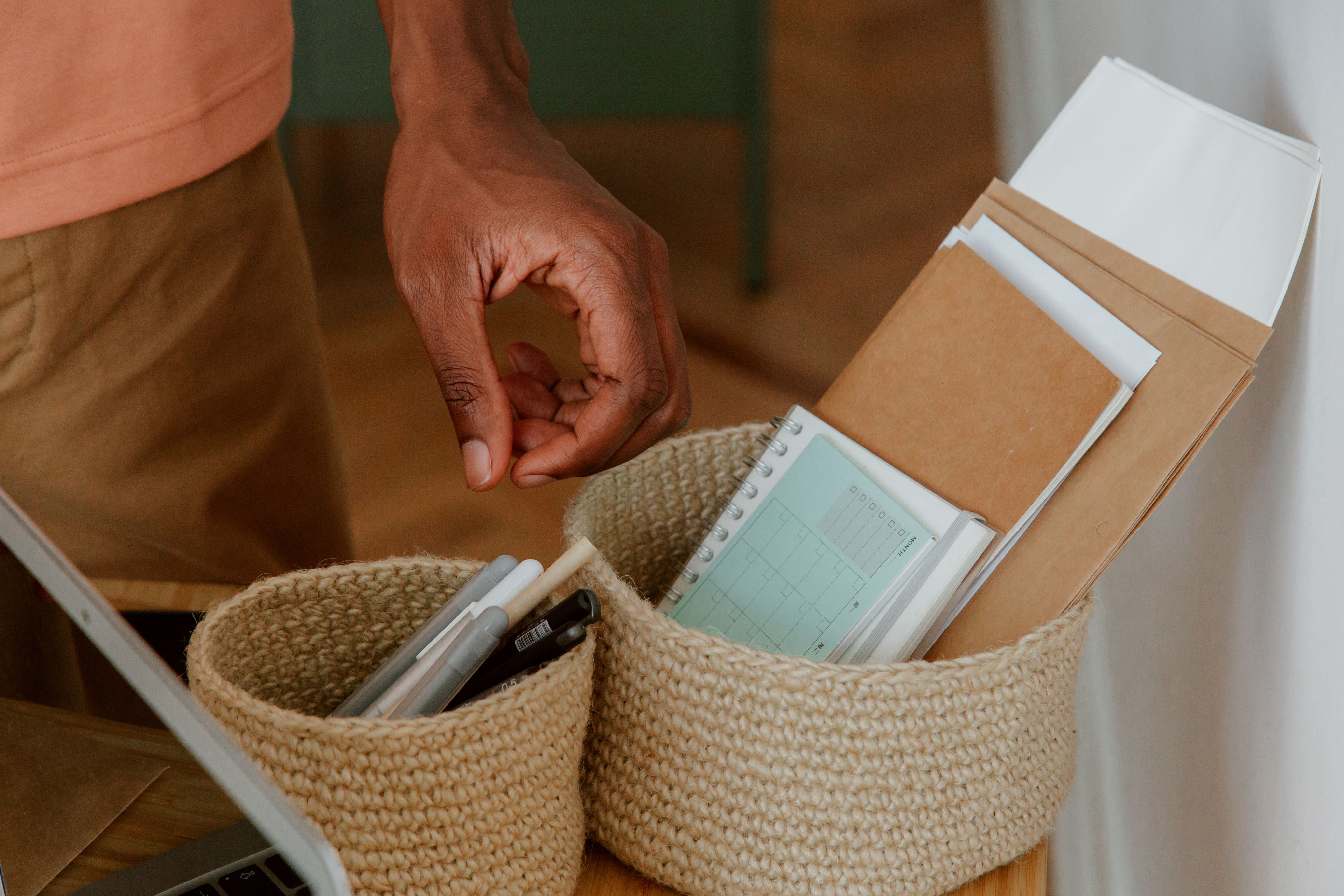
It’s remarkably easy for an organizing project to turn into a shopping project.
You decide to organize the bathroom, and suddenly you’re looking at matching acrylic containers. The pantry needs work, so you start pricing out storage bins. You want to tackle the closet, and somehow a new shelving system, matching hangers, drawer dividers, and twelve identical baskets have made their way into your cart.
But here’s the thing:
You probably don’t need to buy anything to make your home significantly more organized.
In fact, buying organizers before you figure out what you actually need can create an entirely new category of clutter.
You can organize your home using the storage you already have, containers you’d normally recycle, items sitting unused in other rooms, and a little creativity.
And there’s another advantage to doing it this way: you get to figure out which organizing systems actually work for you before spending money on them.
Here’s how to organize your home without buying anything — including plenty of surprisingly useful things you can repurpose along the way.
Start With Less, Not More Storage
Before looking for containers, baskets, boxes, or bins, start with what you’re trying to organize.
Pull everything out of one small, manageable area.
That might be:
- One kitchen drawer
- A bathroom cabinet
- Your nightstand
- One closet shelf
- The cabinet underneath the kitchen sink
- A section of your pantry
- Your entryway
- A single dresser drawer
Then sort what you find.
Throw away obvious trash. Set aside anything that belongs somewhere else. Remove things you don’t use or want anymore.
Only then should you start thinking about storage.
This matters because you may discover that your storage problem wasn’t actually a lack of storage.
It was simply too much stuff.
If you’re unsure whether you should be getting rid of things before trying to organize them, start with Should You Declutter or Organize First?.

Shop Your House Before You Shop for Organizers
Once you’ve decided what needs to stay, take a walk around your house.
You’re looking for underused storage.
Maybe there’s a basket in the guest room holding three blankets that could easily live on a shelf.
Maybe you have a decorative bowl sitting empty.
Maybe there’s a small plastic bin buried in a closet.
Maybe a shoebox is about to go into recycling.
Maybe you bought a drawer organizer years ago that never quite worked where you originally put it.
Collect these things in one place before deciding what goes where.
Useful items to look for include:
- Baskets
- Shoeboxes
- Small cardboard boxes
- Glass jars
- Food storage containers
- Trays
- Bowls
- Mugs
- Small bins
- Tote bags
- Gift boxes
- Zippered pouches
- Magazine holders
- Hooks you already own
- Small shelving units
- Crates
- Empty organizers from other rooms
Don’t worry yet about whether everything matches.
First, figure out whether it works.
Use the Space You Already Have Differently
Sometimes the solution isn’t another organizer.
It’s reorganizing the storage space itself.
Before adding anything, look at whether you’re making good use of the space you already have.
Move rarely used items out of prime storage
The easiest-to-reach shelves and drawers should generally contain the things you use most often.
That enormous serving platter you use twice a year doesn’t need the easiest cabinet in the kitchen.
Neither do seasonal clothes, backup toiletries, holiday dishes, or rarely used appliances.
Move less frequently used items higher, lower, or farther away and give your everyday items the convenient spaces.
Store things where you actually use them
Your house doesn’t need to follow conventional storage rules.
If you use something in a particular room, keeping it there can make far more sense than storing it in the place where that type of item traditionally “belongs.”
Keep scissors where you actually need scissors.
Keep dog supplies near the door you use for walks.
Keep extra toilet paper close to the toilet.
Keep your reusable grocery bags somewhere you’ll remember them on the way out.
Your existing habits can tell you a lot about where things belong.
If this is something you struggle with, How to Decide Where Things Should Go in Your Home goes much deeper into choosing practical storage locations.
Look for empty vertical space
Cabinets and closets often have more usable room than we realize because we naturally organize things horizontally.
Before buying another storage solution, look up.
Can something you already own be stacked?
Can a rarely used item move to the top shelf?
Can you fold clothing differently to make better use of a drawer?
Can you safely stack sturdy containers rather than spreading them across an entire shelf?
You may have more storage than it initially appears.
Organize by Category Before You Organize by Container
This is one of the easiest ways to organize without buying anything.
Group similar things together first.
Instead of immediately asking:
“What container should I buy for this?”
ask:
“What actually needs to live here?”
For example, pull all of your bathroom extras together.
You might discover you have:
- Four unopened toothpastes
- Extra toothbrushes
- Travel toiletries
- Backup shampoo
- First-aid supplies
- Hair products
- Cleaning supplies
Now you have categories.
Once you know how large each category actually is, you can find an appropriately sized container from somewhere else in your house.
This is much easier than buying a set of bins and then trying to make your belongings fit inside them.

Get Creative: Things You Can Reuse to Organize Your Home
This is where organizing without buying anything gets fun.
Plenty of things that would normally end up in recycling or sit unused in a cabinet make surprisingly useful organizers.
You don’t have to use all of these ideas, of course. The goal isn’t to start hoarding containers because they might someday become useful.
Save something when you already know what you’re going to use it for.
1. Shoeboxes
The humble shoebox is genuinely excellent storage.
Use shoeboxes to contain:
- Winter accessories
- Small toys
- Craft supplies
- Extra toiletries
- Charging cables and electronics
- Photos and keepsakes
- Small gardening supplies
- Cleaning cloths
- Backup office supplies
If an open box works better, simply remove the lid.
You can also cut a shoebox down to create shallower trays for drawers.
2. Shoebox Lids
Don’t overlook the lids.
A sturdy shoebox lid makes a great shallow organizer for things that otherwise migrate around a shelf.
Try one underneath:
- Oils and vinegars in a pantry
- Cleaning products
- Toiletries
- Perfume bottles
- Condiments
- Small plant supplies
- Bottles underneath the bathroom sink
They can also function as makeshift drawer trays.
One major benefit: if something leaks, the mess may be contained inside the lid instead of spreading across the entire shelf.
3. Small Cardboard Boxes as Drawer Dividers
Before buying drawer dividers, raid your recycling.
Small boxes from tea, snacks, medicine, cosmetics, phones, or other household products can create individual sections inside a larger drawer.
Arrange several together to separate things like:
- Office supplies
- Makeup
- Socks
- Underwear
- Charging cables
- Kitchen tools
- Batteries
- Small hardware
If a box is too tall, cut it down.
You can even wrap the visible edges in leftover wrapping paper if you care about how it looks.
Or don’t.
It’s inside a drawer.
4. Glass Jars
Empty pasta sauce, jam, pickle, and other food jars are useful for much more than food storage.
After thoroughly washing and drying them, use jars for:
- Pens and pencils
- Paintbrushes
- Buttons
- Small craft supplies
- Hair ties
- Cotton swabs
- Spare change
- Small hardware
- Plant propagation
- Loose office supplies
Clear jars are especially helpful because you can immediately see what’s inside.
Just avoid using ordinary reused glass containers for purposes where breakage could create a safety issue.
5. Mugs You Never Use
Most kitchens seem to acquire more mugs than anyone could reasonably drink from.
Instead of cramming every mug into the cabinet, use a few favorites elsewhere.
Mugs make convenient holders for:
- Pens
- Makeup brushes
- Toothbrushes
- Small kitchen utensils
- Paintbrushes
- Scissors
- Eyeglass cleaning cloths and accessories
That oddly shaped souvenir mug nobody wants coffee from might finally earn its keep.
6. Takeout Containers
Sturdy, thoroughly cleaned takeout containers can be useful inside drawers and cabinets.
Use them to group:
- Small toys
- Craft supplies
- Hardware
- Cords
- Batteries
- Office supplies
- Small bathroom items
They’re especially useful when you’re experimenting with an organizing system.
If you realize three months from now that you hate the setup, you haven’t spent $40 on matching containers.
7. Gift Boxes
Those sturdy little boxes that phones, jewelry, candles, cosmetics, and gifts sometimes come in are practically drawer organizers already.
Use the bottoms and lids separately to create compartments.
They’re particularly good for:
- Jewelry
- Desk drawers
- Nightstand drawers
- Hair accessories
- Sewing supplies
- Small electronics
- Makeup
This is one of those rare situations where keeping a nice box actually pays off.

8. Tin Cans
Clean cans can become simple holders for pens, paintbrushes, craft tools, or other small items.
Make sure there are no sharp edges before using them.
If you want them to look a little nicer, cover the outside with leftover paper, fabric, twine, or paint you already have.
9. Egg Cartons
Egg cartons are surprisingly useful for organizing very small items.
The individual compartments work well for things like:
- Beads
- Buttons
- Small jewelry pieces
- Screws
- Nuts and bolts
- Tiny craft supplies
They’re particularly handy when you’re working on a project and need to keep several small parts separated.
10. Ice Cube Trays
Have an old ice cube tray sitting around?
Its little compartments make it useful for organizing tiny items inside drawers.
Think earrings, beads, push pins, small hardware, sewing supplies, or other miniature objects.
11. Food Storage Containers Missing Their Lids
That collection of mismatched food storage containers finally has a purpose.
Use lidless containers as drawer or cabinet organizers for:
- Packets
- Hair accessories
- Medicine cabinet items
- Small toys
- Office supplies
- Batteries
- Cords
- Kitchen odds and ends
A container doesn’t need a lid if it’s living inside a drawer.
12. Tote Bags
If you have approximately four thousand reusable tote bags hiding inside one another, put some of them to work.
They can hold:
- Out-of-season clothing
- Items waiting to be donated
- Beach supplies
- Reusable grocery bags
- Sports equipment
- Kids’ outdoor gear
- Returns that need to leave the house
A sturdy tote can essentially become a soft-sided storage bin.
13. Zippered Pouches
Old cosmetic bags, pencil cases, travel pouches, and small zippered bags are perfect for categories containing lots of little things.
Try them for:
- Chargers
- Travel toiletries
- First-aid supplies
- Sewing supplies
- Small toys
- Tech accessories
- Spare cords
- Car supplies
They’re also easy to grab and move when you need the entire category somewhere else.
14. Small Bowls and Dishes
A small bowl doesn’t need to stay in the kitchen.
Use bowls, ramekins, saucers, or small dishes you already own as landing zones for:
- Keys
- Jewelry
- Loose change
- Hair ties
- Earbuds
- Everyday pocket items
These work particularly well when clutter tends to consist of several tiny things rather than one big category.
15. Old Baking Sheets or Trays
A tray can turn a collection of loose objects into one contained category.
Use an old serving tray, baking sheet, or other shallow tray underneath pantry supplies, cleaning products, plant-care supplies, toiletries, or frequently used kitchen ingredients.
Instead of moving six bottles individually, you can move the entire tray.
16. Cardboard Tubes
Paper towel and toilet paper tubes can help keep small cords separated inside a box or drawer.
Loosely coil one cord inside each tube and, if needed, write what it belongs to on the outside.
They’re also useful for containing extension cords or small strings of lights.
17. Empty Tissue Boxes
A tissue box with the top opening intact can dispense lightweight items surprisingly well.
Try using one for:
- Plastic grocery bags
- Cleaning cloths
- Small reusable bags
Pull one out as you need it instead of dealing with a giant loose pile.
18. Cereal Boxes as Magazine Holders
This one requires a little cutting.
Cut a cereal box diagonally across the upper half and you have a lightweight magazine-style holder.
Use it for:
- Papers
- Notebooks
- Kids’ activity books
- Thin folders
- Craft paper
It won’t be as durable as a store-bought file holder, but it can be surprisingly functional.
19. Old Pillowcases
Pillowcases can make useful breathable storage bags for soft items.
Use them for:
- Extra linens
- Seasonal clothing
- Scarves
- Fabric
- Out-of-season accessories
They can be especially handy for keeping sets of linens together: fold the sheets and tuck the entire set inside one matching pillowcase.
20. Boxes From Things You Already Buy
Before recycling sturdy packaging, take a second to look at its shape.
You don’t need to keep every box that enters your home. Please don’t create a cardboard-box collection in the name of organization.
But if you currently need an organizer and a perfectly sized box happens to arrive, use it.
That’s really the philosophy behind this entire approach.

Repurpose Furniture Before Buying More Storage
Small containers aren’t the only things worth reconsidering.
Look around for furniture that isn’t being used particularly well.
An unused nightstand could become entryway storage.
A small bookshelf could move into a pantry.
A dresser could store linens, craft supplies, games, or office materials instead of clothes.
A bar cart could hold art supplies, plants, bathroom items, or coffee supplies.
A bench might store shoes underneath.
Before bringing another storage piece into your home, ask whether something you already own could do the job.
Use Hooks, Shelves, and Hardware You Already Have
You may also have organizing supplies sitting unused in a junk drawer, basement, garage, or toolbox.
Look for:
- Command-style hooks
- S-hooks
- Cup hooks
- Spare shelving
- Pegboard accessories
- Tension rods
- Over-the-door organizers
- Drawer dividers
- Shelf risers
- Small baskets
Sometimes the organizing product you think you need is something you bought five years ago and forgot you owned.
Don’t Make Your DIY Organizers Too Complicated
There’s a funny trap you can fall into here.
You start trying to save money by making organizers yourself and suddenly you’re three hours into an elaborate cardboard construction project involving hot glue, decorative paper, labels, and a ruler.
If you enjoy doing that, fantastic.
If you don’t, stop.
The goal is to make your home easier to manage — not give yourself another project.
A shoebox can just be a shoebox.
A jar can just be a jar.
A cardboard box inside a drawer doesn’t need to look like something you’d see on an organizing account.
It needs to hold your stuff.
Test Your Organizing System Before Spending Money
Using what you already have gives you something store-bought organizers can’t:
a free trial run.
Suppose you think three baskets would solve the clutter in your entryway.
Before buying them, use three cardboard boxes.
Live with the system for a couple of weeks.
Do people actually put their things inside?
Are the categories useful?
Are the boxes in the right place?
Do you actually need three, or would two work better?
If the system works beautifully and you eventually want something more durable or attractive, then you can buy it.
Now you’re buying an organizer because you know exactly what you need — not because you’re hoping it will somehow make you organized.
When Buying Organizers Actually Does Make Sense
Organizing without buying anything doesn’t mean you should never buy storage products.
Sometimes the right organizer genuinely makes a space work better.
You might eventually benefit from a particular shelf, drawer divider, basket, hook, or container because it solves a specific problem your existing belongings can’t.
The important part is the order:
Declutter → Categorize → Decide where things belong → Try what you have → Buy only what you’re missing.
Not:
Buy organizers → Hope everything fits.
If you want a more complete process for tackling your home room by room, start with How to Organize Your Home: A Practical Step-by-Step Guide.
How to Make Free Organizing Systems Actually Last
Whether your organizer cost $50 or came from the recycling bin doesn’t really determine whether your house will stay organized.
What matters is whether the system is easy to use.
Before deciding you’ve finished organizing an area, test it.
Ask yourself:
- Is everything easy to find?
- Can I put things away quickly?
- Is the storage near where I actually use these items?
- Are the categories obvious?
- Is there enough room for everything?
- Can I maintain this when I’m busy or tired?
If the answer is yes, you probably have a good system.
If the same clutter starts accumulating again within a few days, don’t assume you failed. Take another look at the system.
Our guide to Why Your Home Won’t Stay Organized (and How to Fix It) covers exactly what to look for when an organizing system keeps falling apart.
Frequently Asked Questions About Organizing Without Buying Anything
Can you really organize your home without buying organizers?
Yes. You can organize many areas of your home by decluttering first, rearranging existing storage, repurposing containers you already own, and using boxes, jars, trays, baskets, and other household items to create categories. Store-bought organizers can be useful, but they’re not required for an organized home.
What can I use instead of storage bins?
Shoeboxes, cardboard boxes, baskets, tote bags, food storage containers, gift boxes, trays, and sturdy packaging can all work as alternatives to storage bins. Choose a container based on the size and type of items you need to store.
What can I use instead of drawer dividers?
Small cardboard boxes, gift box lids, food containers, ice cube trays, and other shallow containers can create sections inside drawers. Cutting cardboard boxes down to the height of the drawer can create simple custom dividers at no cost.
How can I organize a small house with no storage?
Start by decluttering items you no longer need, then prioritize your existing storage for frequently used belongings. Look for underused vertical space, move rarely used items out of prime storage areas, group similar items together, and repurpose furniture or containers you already own.
Should I buy organizers before decluttering?
Usually, no. Declutter and categorize your belongings first. Once you know what you’re keeping, where it will live, and how much space it requires, you can determine whether you actually need additional organizers.
How do I make homemade organizers look nice?
You can cover cardboard containers with leftover wrapping paper, fabric, wallpaper, contact paper, or paint if you already have those materials. You can also use matching containers you already own in visible areas and save mismatched DIY storage for drawers and cabinets. But homemade organizers don’t have to be decorative to be useful.
What household items are good for organizing?
Some of the most useful household items to repurpose for organization include shoeboxes, glass jars, small cardboard boxes, gift boxes, mugs, bowls, trays, tote bags, zippered pouches, food storage containers, egg cartons, tissue boxes, and sturdy product packaging.

You Don’t Need to Buy Your Way to an Organized Home
There’s nothing wrong with a beautiful set of matching baskets.
But baskets aren’t what make a home organized.
Good systems do.
Before spending money, work with what you already have.
Declutter what you don’t need. Pay attention to where you actually use things. Move underused storage where it would be more helpful. Raid the recycling bin when you need a drawer divider. Turn the random mug in the back of the cabinet into a pen cup.
Most importantly, give yourself time to figure out how you actually use your home.
If a free organizing system works, keep it.
If it works but you eventually want something prettier or more durable, replace it later.
And if it doesn’t work?
You can change it without regretting the $75 worth of organizing bins you bought first.
Organize first. Shop second.